Supplies to have ready
- Food and water bowls (stainless steel or ceramic are easy to clean)
- Puppy food, ideally the same food the breeder or shelter used, so the switch is gentle
- Crate sized for your puppy's adult size, with a divider
- Bed and a washable blanket
- Collar or harness, leash and ID tag with your phone number
- Chew toys in a few textures (puppies chew a lot while teething)
- Training treats, small and soft
- Poop bags, enzyme cleaner and paper towels for accidents
- Baby gates or a playpen to limit where the puppy can roam
- Brush, nail clippers and puppy shampoo
Puppy-proof your home
- Tuck away electrical cords and phone chargers.
- Move shoes, socks, kids' toys and anything small enough to swallow.
- Lock up cleaning products, medicines and trash cans.
- Check that houseplants are safe for dogs, and move any that aren't.
- Block off stairs and any rooms that are off-limits.
Book the first vet visit
Schedule a checkup within the first few days. Bring any records from the breeder or shelter. Your vet will talk through the puppy vaccine series, deworming, flea and tick prevention, microchipping and when to spay or neuter. Keep every record in one place so you always know what's due next.
Your first week plan
- Day 1: Keep it calm. Show the puppy where to potty, where to sleep and where the water is.
- Days 1-7: Take the puppy out after waking, after eating, after playing and every 1 to 2 hours. Praise and treat right after it goes outside.
- Start the crate slowly. Feed meals in the crate and leave the door open at first.
- Set a routine for meals, potty breaks, play and naps. Puppies learn fastest with a steady schedule.
- Start gentle handling: touch paws, ears and mouth daily so vet visits and grooming are easier later.
Budget for the first year
The first year is the most expensive. Between adoption, vaccines, spay or neuter, supplies and training, many owners spend well over $1,000. Our pet cost calculator helps you plan, and this guide breaks it down.
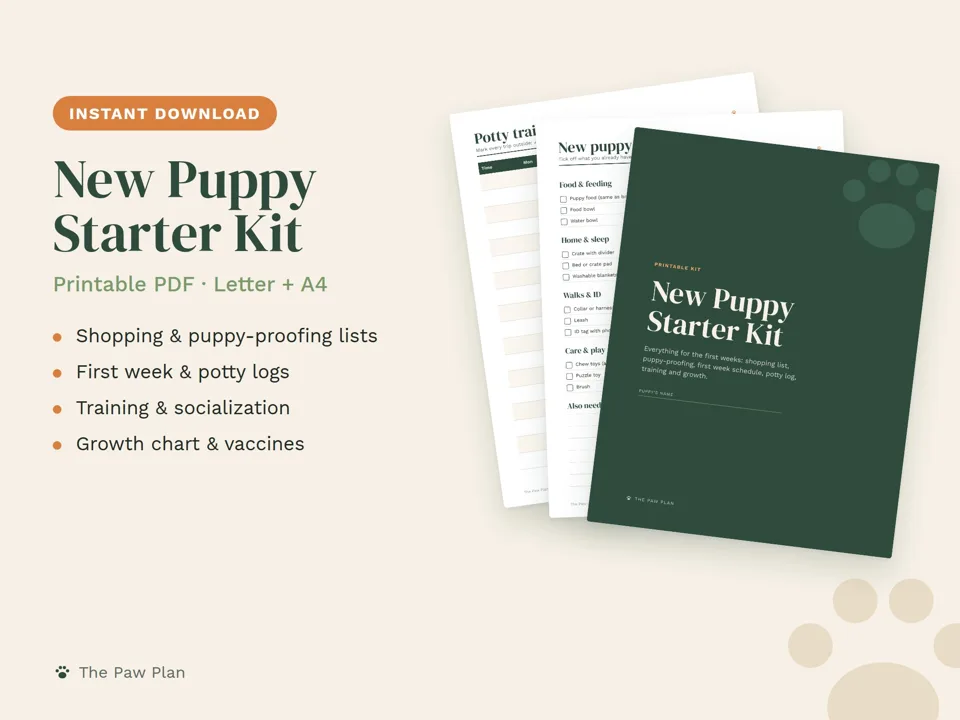
Bringing home a puppy?
Our new puppy starter kit has the checklist, potty log, training tracker and vaccine record in one printable pack.
Try the numbers for your pet
Our free pet cost calculator works it out in seconds. No sign-up.
Open the calculatorQuestions people ask
What do I need to buy before getting a puppy?
At minimum: food, bowls, a crate, a bed, a collar or harness with an ID tag, a leash, chew toys, training treats, poop bags and an enzyme cleaner for accidents.
When should a new puppy see the vet?
Within the first few days after you bring it home. Your vet will start or continue the vaccine series and talk about deworming, parasite prevention and microchipping.
How often should a puppy go outside to potty?
Young puppies usually need to go out every 1 to 2 hours, plus right after waking up, eating, drinking and playing.
Save this for later.
Pin it to your pet board so it's there when you need it.
The Paw Plan shares general information, not veterinary advice. Every pet is different, so check with your vet about your pet's health, diet and care.
More guides you'll like
Bringing home a rescue dog: what to expect
Rescue dogs need time to trust a new home. The 3-3-3 rule is a simple way to know what's normal and how to help.
Read the guide →A puppy potty training schedule that works
Potty training is mostly about timing. Take your puppy out before they need to go, and reward them every time they get it right.
Read the guide →New cat checklist: everything you need before day one
Cats settle in best when everything is ready before they arrive. Here's what to buy, how to set up, and what to do the first week.
Read the guide →One easy pet-care tip a week.
Short, practical and friendly. Join free and get our printable pet emergency contact card right away.