Start with calories, not cups
Foods vary a lot in calories per cup, so the same number of cups can mean very different amounts of food. Vets often estimate a dog's needs from its resting energy requirement, then adjust for life stage and activity. Our dog food calculator does the math for you.
Rough daily calories for a spayed or neutered adult dog
- 10 lb: about 350 calories
- 20 lb: about 585 calories
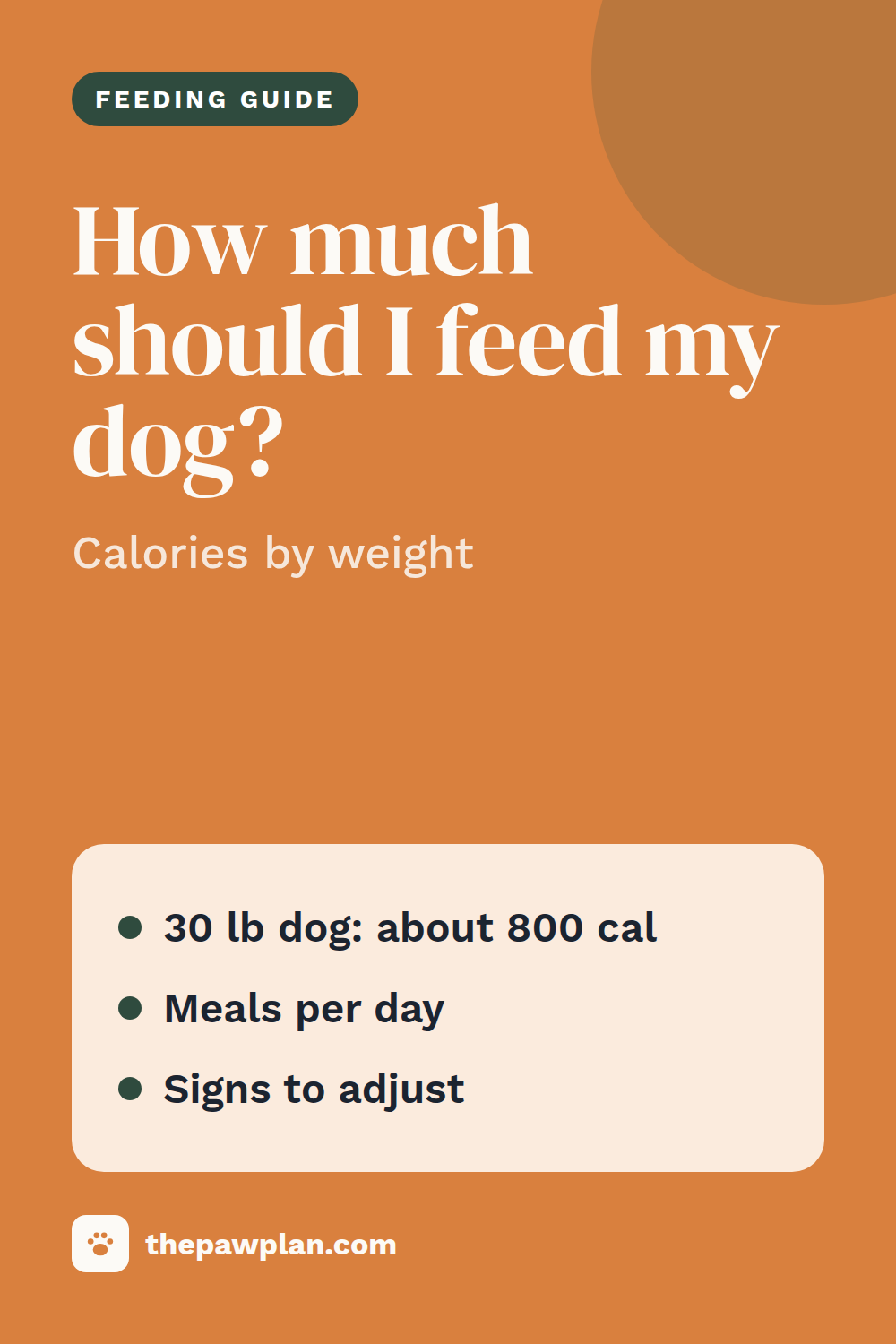
- 30 lb: about 800 calories
- 50 lb: about 1,165 calories
- 70 lb: about 1,500 calories
- 90 lb: about 1,800 calories
Puppies need much more for their size, and less active or senior dogs usually need less. These are estimates; your dog's body condition is the real test.
How many meals a day?
- Young puppies: 3 to 4 small meals a day
- Puppies 6 to 12 months: usually 2 to 3 meals
- Adult dogs: usually 2 meals a day
Signs you need to adjust
- You can't feel the ribs easily, or there's no waist from above: feed a little less.
- Ribs, hip bones or spine are very visible: feed a little more and check with your vet.
- Change portions by about 10% at a time and re-weigh in two to three weeks.
Treats count. Keep them to about 10% of daily calories.
Stay consistent with meals, treats and weight.
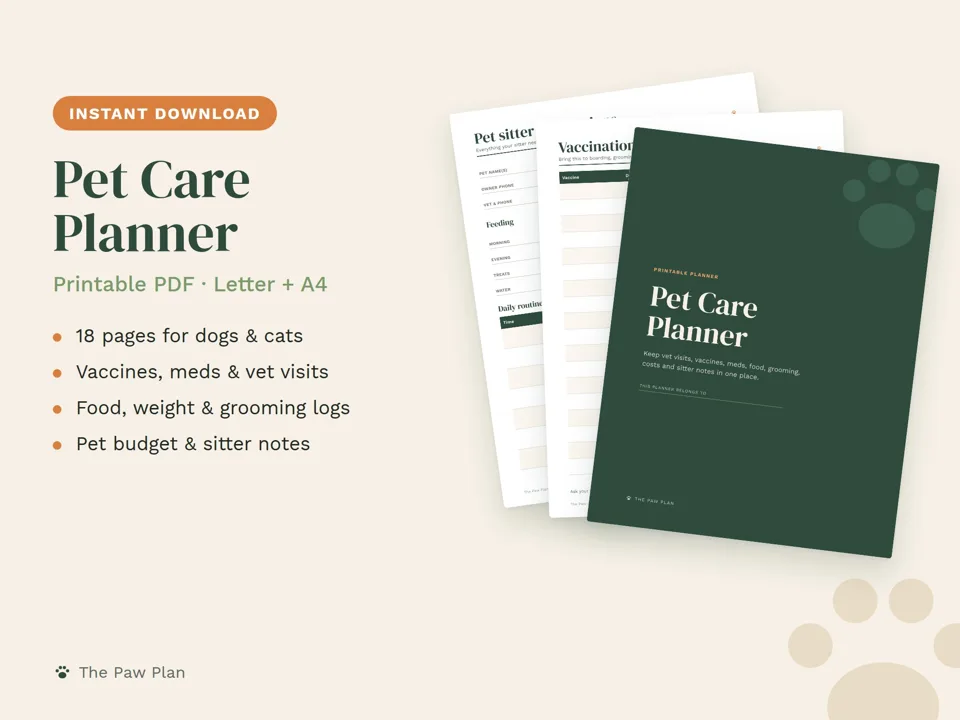
Our pet care planner includes a feeding schedule, weight tracker and vet log. Instant download.
Try the numbers for your pet
Our free pet food calculator works it out in seconds. No sign-up.
Open the calculatorQuestions people ask
How many cups of food should I feed my dog?
It depends on your dog's weight and the food's calories per cup. A typical 30 lb adult dog needs about 800 calories, or roughly 2 cups of a 380 kcal/cup food.
Should I follow the feeding guide on the bag?
Use it as a starting point. It often runs high, so watch your dog's weight and body condition and adjust.
How many times a day should a dog eat?
Most adult dogs do well with two meals a day. Young puppies need three to four smaller meals.
Save this for later.
Pin it to your pet board so it's there when you need it.
The Paw Plan shares general information, not veterinary advice. Every pet is different, so check with your vet about your pet's health, diet and care.
More guides you'll like
Dog years to human years: the real chart
The "times seven" rule is a myth. Dogs grow up fast, and big dogs age faster than small ones.
Read the guide →Cat years to human years: chart and life stages
Cats grow up in a hurry, then age about four human years for every cat year. Here's the chart.
Read the guide →How to keep track of your pet's vaccines and vet records
Boarding, groomers, daycare and new vets all ask for vaccine records. A simple system saves a lot of scrambling.
Read the guide →One easy pet-care tip a week.
Short, practical and friendly. Join free and get our printable pet emergency contact card right away.