The usual schedule
| Life stage | Typical visits |
|---|---|
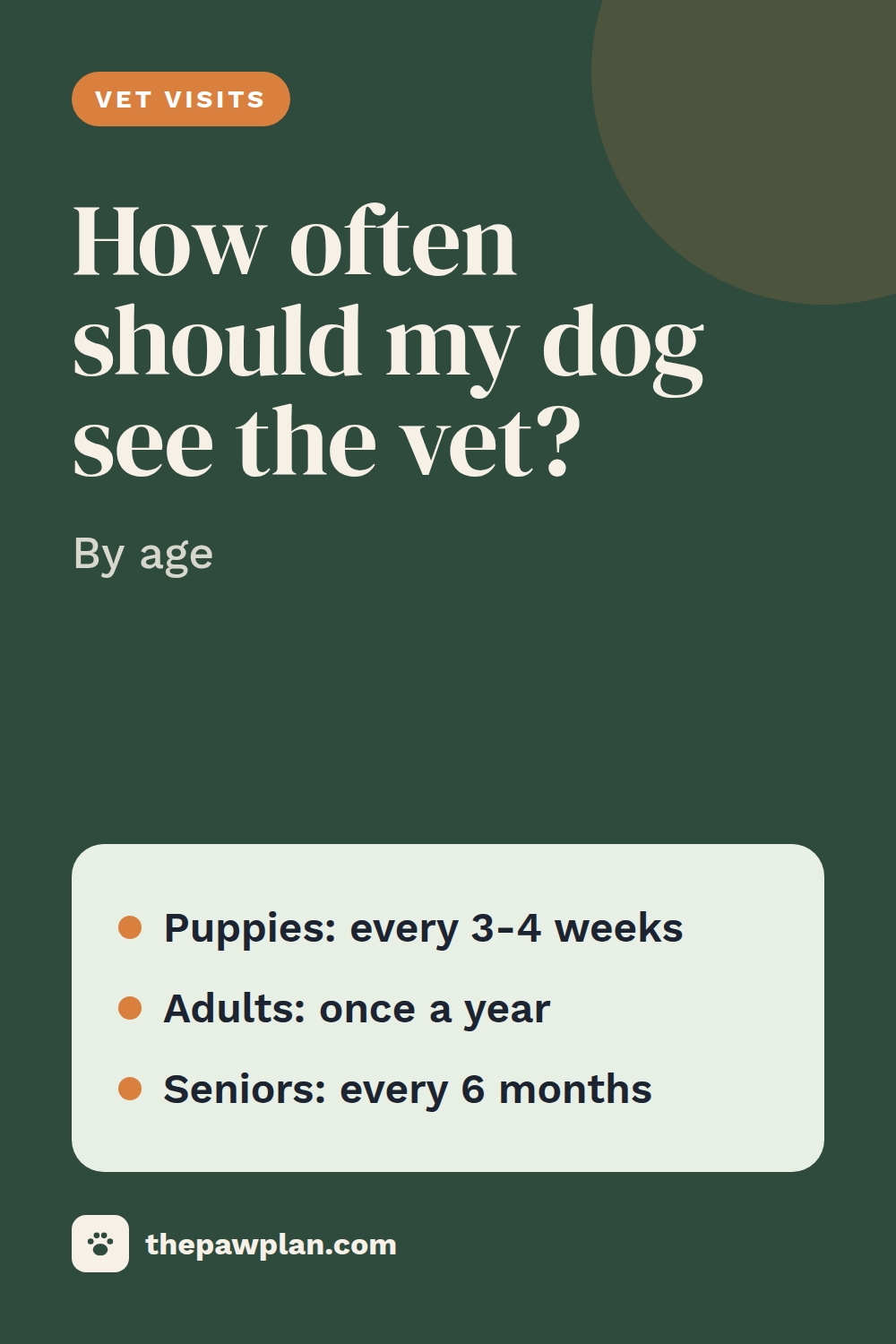
| Puppy (up to about 4 months) | Every 3 to 4 weeks during the vaccine series |
| Adult | Once a year for a wellness exam |
| Senior | Many vets recommend every 6 months |
When a dog becomes a "senior" depends on size. Large and giant breeds age faster, so they often count as seniors earlier than small dogs. Our dog age calculator shows your dog's life stage.
What happens at a wellness visit
- A nose-to-tail exam: eyes, ears, teeth, heart, lungs, skin and weight
- Vaccines or boosters that are due
- Parasite checks and prevention for fleas, ticks and heartworm
- Bloodwork or other tests, especially for older dogs
- A chance to ask about food, behavior and anything you've noticed
Don't wait for the next checkup if you see:
- Not eating for more than a day, or repeated vomiting or diarrhea
- Trouble breathing, collapse or a swollen belly
- Straining to pee or poop
- Limping that doesn't improve, or signs of pain
- Sudden changes in thirst, weight or behavior
When in doubt, call your vet. They'd rather hear from you early.
Make visits easier
Bring a list of questions and your dog's records: vaccines, medications and past visits. Keeping them on one page means you're never guessing about dates.
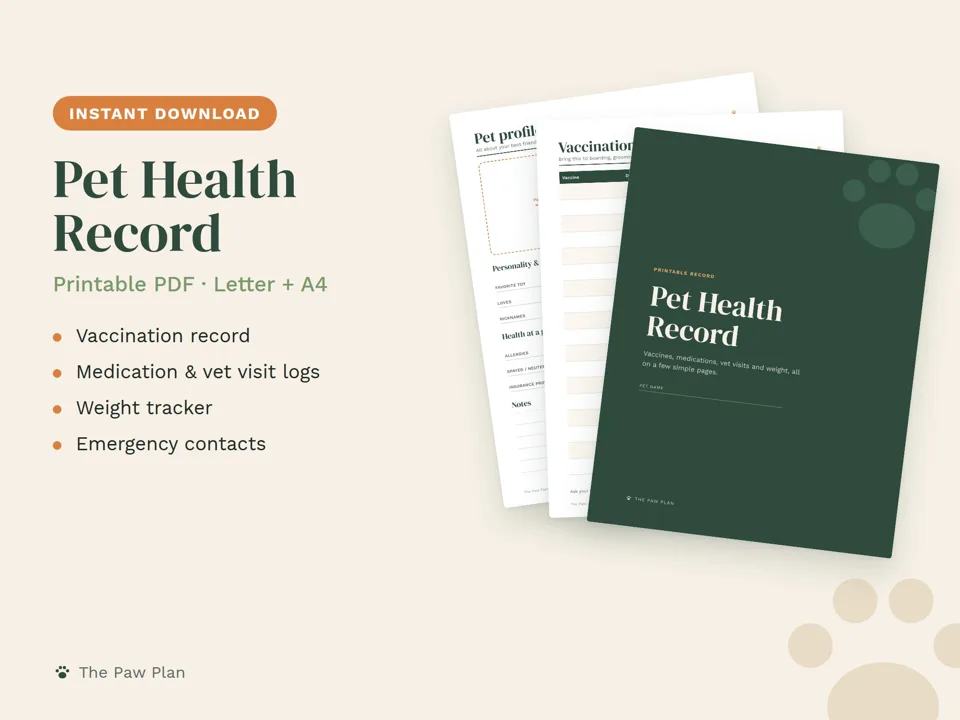
Never lose track of vaccines and vet visits.
Our printable pet health record keeps vaccines, meds, weight and vet visits together. Instant download.
Try the numbers for your pet
Our free dog age calculator works it out in seconds. No sign-up.
Open the calculatorQuestions people ask
How often should a healthy adult dog see the vet?
Most healthy adult dogs have a wellness exam once a year.
How often should a senior dog see the vet?
Many vets recommend every 6 months for senior dogs, since health can change faster as dogs age.
How much does a routine vet visit cost?
It varies a lot by area and clinic. An exam alone often costs somewhere around $50 to $100 or more, with vaccines and tests extra. Ask your clinic for their prices.
Save this for later.
Pin it to your pet board so it's there when you need it.
The Paw Plan shares general information, not veterinary advice. Every pet is different, so check with your vet about your pet's health, diet and care.
More guides you'll like
How much should I feed my dog?
The right amount depends on your dog's weight, age, activity and food. Here's a simple way to find a starting point and adjust.
Read the guide →Dog years to human years: the real chart
The "times seven" rule is a myth. Dogs grow up fast, and big dogs age faster than small ones.
Read the guide →Cat years to human years: chart and life stages
Cats grow up in a hurry, then age about four human years for every cat year. Here's the chart.
Read the guide →One easy pet-care tip a week.
Short, practical and friendly. Join free and get our printable pet emergency contact card right away.